

Green Energy
Green Energy Initiative
Powering Resilient Households. Enabling Green Futures.
Climate change, rising energy costs, environmental
degradation and growing pressure on natural resources are creating new
vulnerabilities for low-income households and climate-exposed communities in
Bangladesh. For many families, unreliable and expensive energy, limited access
to clean cooking solutions, unmanaged organic waste and dependence on
conventional fuels are interconnected challenges that affect household
wellbeing, livelihoods, health and resilience.
GRACE’s Green Energy Initiative responds to these
challenges through affordable, decentralized and climate-responsive renewable
energy solutions that are designed around the realities of vulnerable
households and communities.
From Climate Vulnerability to Green Opportunity
GRACE believes the transition to clean energy should not be
limited to infrastructure—it should create resilience, income and
opportunity at household level.
Our emerging focus is on household- and community-based
biogas and solar energy solutions, particularly for climate-vulnerable and
resource-constrained communities. By transforming locally available resources
such as livestock manure and organic waste into useful energy, while expanding
access to solar power, GRACE seeks to reduce dependence on conventional energy
sources and turn environmental challenges into productive opportunities.
Our approach connects renewable energy, circular economy,
sustainable agriculture, waste management, climate resilience and women’s
economic empowerment within integrated community-based models.
Nature-Based and Circular Solutions
GRACE promotes solutions that work with local ecosystems and
available resources rather than placing additional pressure on them.
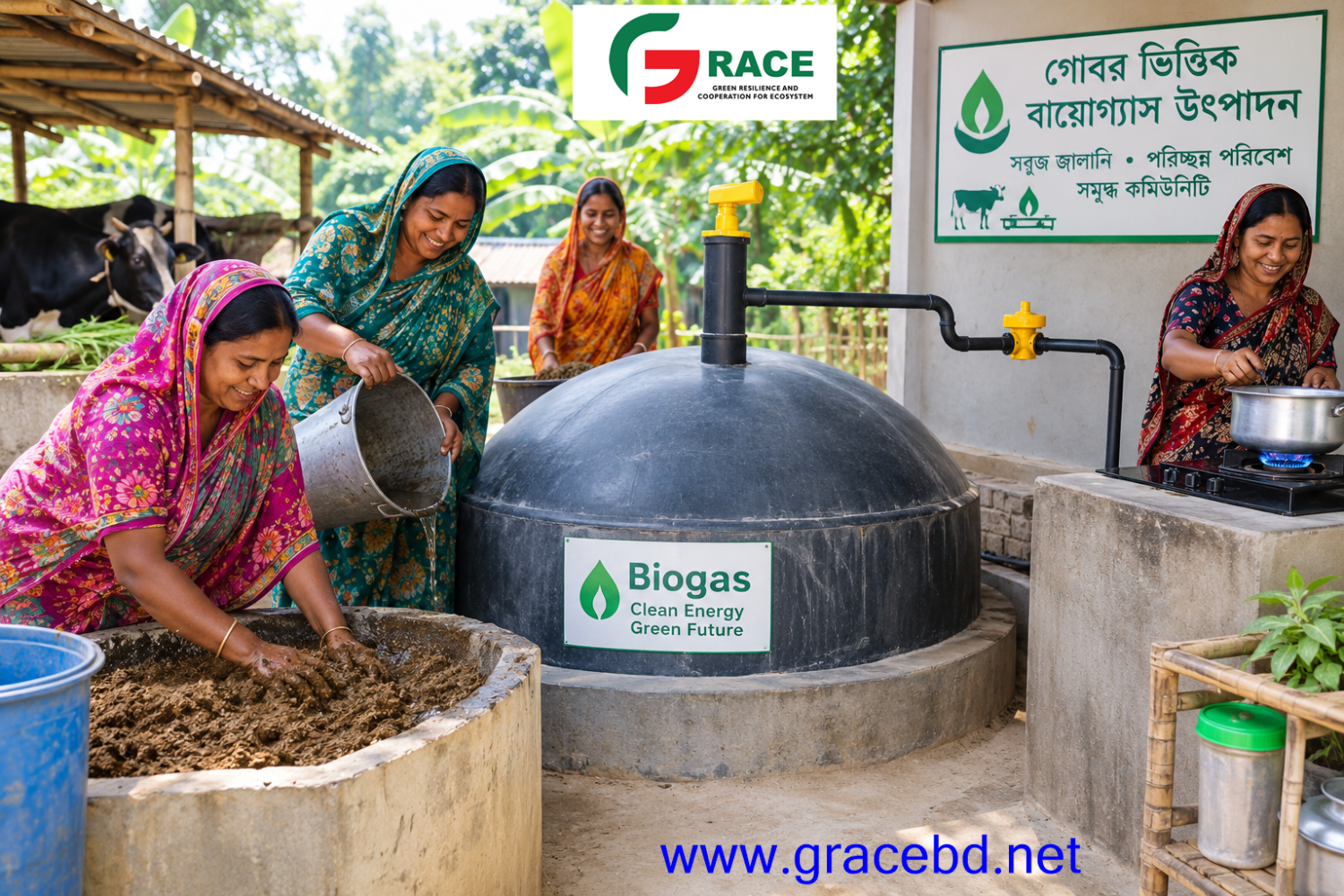
Biogas: Livestock manure and organic waste can be
converted into clean energy while reducing unmanaged waste and generating
nutrient-rich bio-slurry that can support sustainable agriculture.
Solar Energy: Decentralized solar solutions can help
households and community institutions access reliable, clean energy while
reducing dependence on conventional power sources.
Circular Agriculture: Energy, livestock, agriculture
and organic waste can be connected through circular systems—where one
activity's waste becomes another activity's resource.
Climate-Responsive Livelihoods: Renewable energy can
reduce operating costs and enable new livelihood opportunities, particularly
for women and small-scale producers.
This integrated approach allows GRACE to move beyond
individual technologies and develop locally adaptable climate-resilient
systems.
Women at the Centre of the Energy Transition
GRACE places women at the centre of household-level green
energy adoption—not only as beneficiaries, but as decision-makers,
operators, entrepreneurs and community champions.
Women-led adoption and management of biogas and solar
solutions can contribute to:
- Improved
household energy security
- Reduced
exposure to traditional cooking fuels
- Time
and cost savings
- Better
utilization of household and livestock resources
- New
opportunities for green micro-enterprises
- Increased
participation of women in household economic decisions
- Community-level
leadership in climate action
Through training, demonstrations, enterprise development and
peer learning, GRACE aims to strengthen women's capacity to manage and sustain
green energy solutions beyond project support.
Addressing the Challenges Ahead
The future will bring increasingly complex challenges:
climate-induced livelihood losses, energy insecurity, increasing resource
costs, waste accumulation, pressure on natural resources and unequal access to
clean technologies.
GRACE seeks to address these challenges through a demonstrate–learn–adapt–replicate–scale
pathway.
Rather than promoting one-size-fits-all solutions, GRACE
will test models according to local environmental, social and economic
conditions, document results, capture community learning and strengthen
partnerships for wider replication.
Our Emerging Model
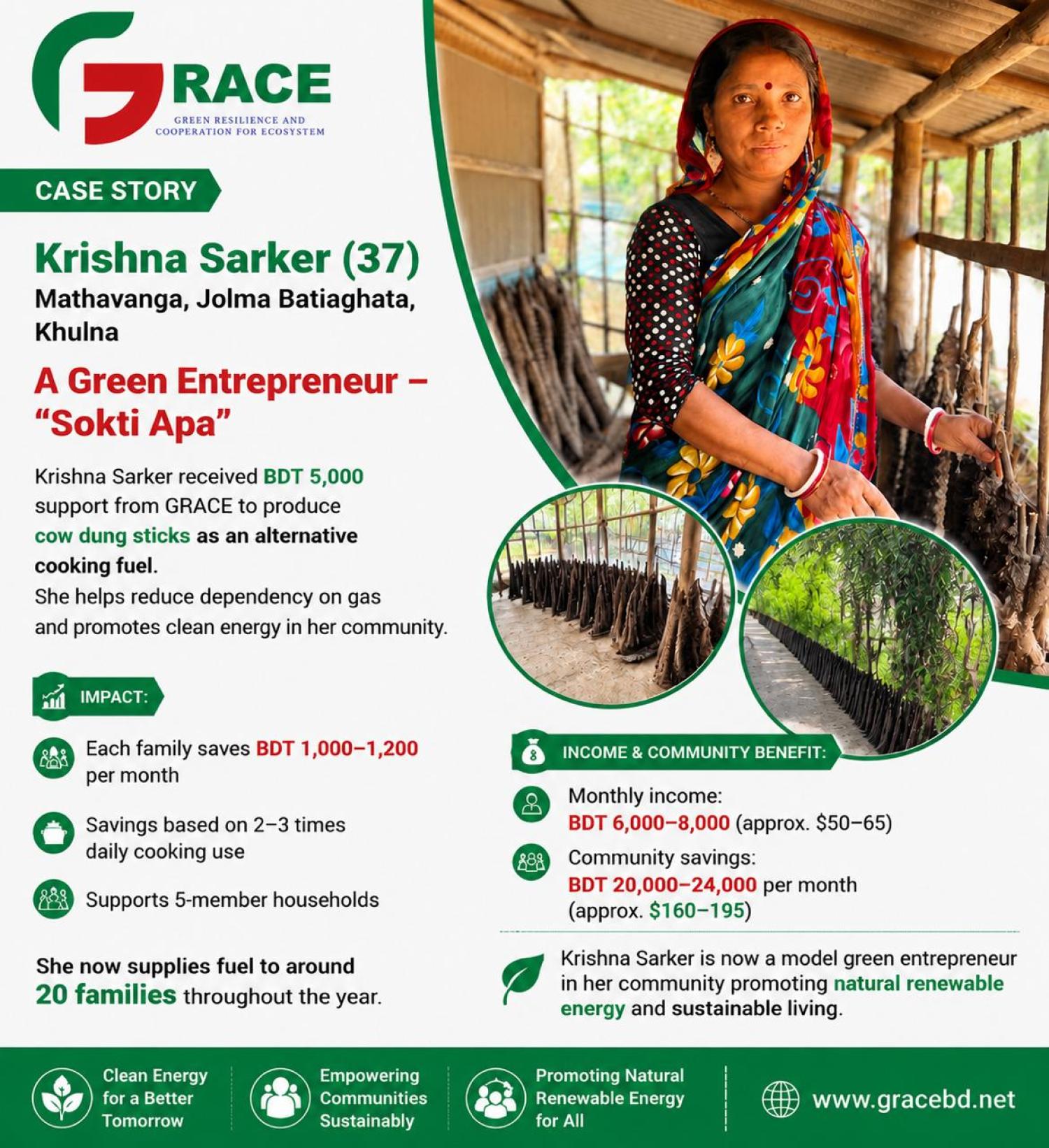
Resource → Technology → Energy → Livelihood → Resilience
Local organic resources and renewable energy technologies
can be connected to create a cycle of value:
Livestock & Organic Waste
↓
Biogas & Resource Recovery
↓
Clean Household Energy
↓
Bio-slurry for Sustainable Agriculture
↓
Reduced Costs & New Livelihood Opportunities
↓
Stronger Household Resilience
Alongside this, solar energy can provide
decentralized and reliable power for households, community facilities and
emerging green enterprises.
From Demonstration to Scale
GRACE is developing its Green Energy Initiative as a learning
and innovation platform, where locally appropriate solutions can be
demonstrated, tested and refined before wider replication.
Our ambition is to develop practical models that can be:
Demonstrated locally → Validated through evidence →
Adapted with communities → Replicated through partnerships → Scaled for wider
climate impact
GRACE welcomes collaboration with development partners,
donors, private-sector actors, technology providers, research institutions and
local institutions to co-create and scale affordable green energy solutions
for climate-vulnerable communities.
Our Vision
A future where vulnerable households are not only
protected from climate and energy challenges—but are empowered to turn local
resources, clean technology and green enterprise into pathways for resilience
and sustainable prosperity.
GRACE — Building, Bonding & Belonging, Together.
Our Partners